Why Modern Drone Apps Need a Hardware-Agnostic OS
Drone apps have come a long way. The baseline expectations among pro operators are real-time, no lag feeds, autonomous navigation, payload automation, and fleet-wide telemetry — all from software running on a tablet or ground station.
Technically, that’s already possible with the current state of drone controllers. But practically, most teams run into a bunch of issues: fragmented hardware, mismatched autopilot firmware, and vendor-locked interfaces. The result is a paradox: software-driven missions are rising in complexity, but the foundation drone apps rely on remains brittle.
3 Technical Roadblocks That Hold Drone Apps Back
Drone apps may look sophisticated on the surface, but behind every clean interface sits a messy stack of incompatible hardware, inconsistent firmware, and timing issues that developers can’t fully control.
The next hidden system-level constraints are the reason even the best apps fail under pressure.
Fragmented Hardware Ecosystem
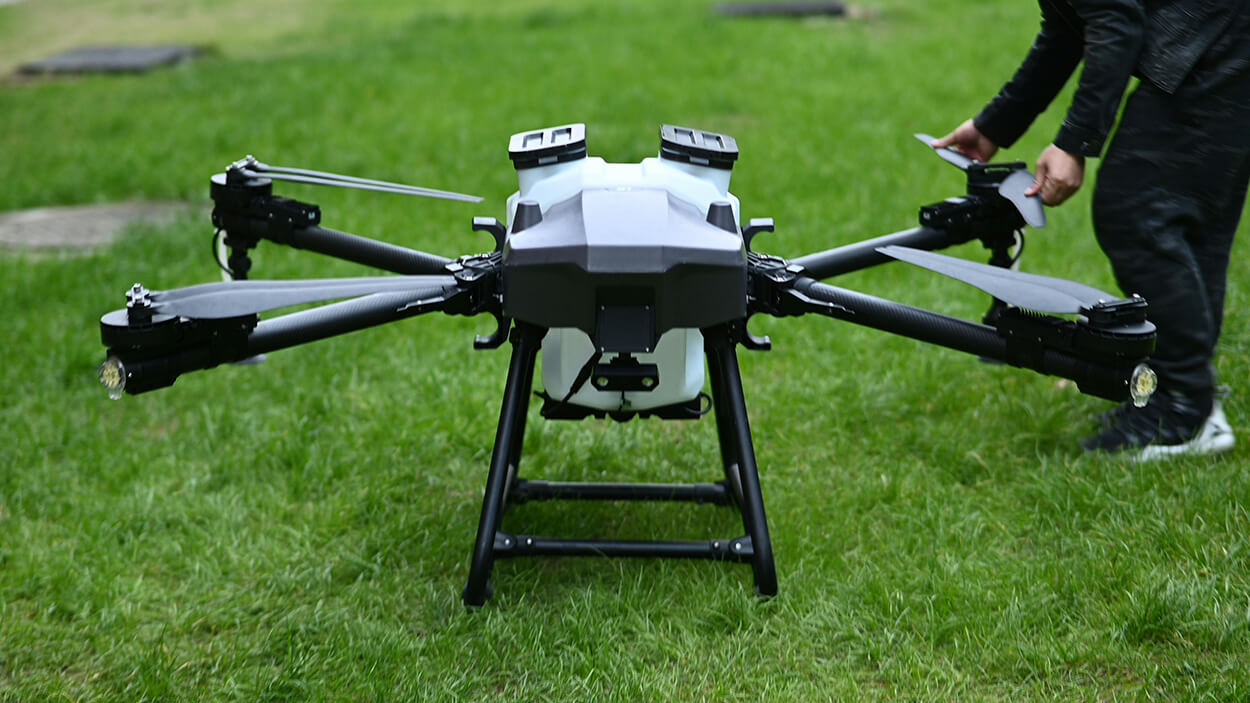
Airframes don’t have a shared “lingo”. A quadcopter relies on a different combo of ESCs, IMUs, radios, battery systems, and payload interfaces than a VTOL. And even within the same class (e.g., FPV quadcopter vs inspection quadcopter), wiring schemes, timing behavior, and sensor stacks differ a lot across manufacturers.
So drone apps built for one platform rarely behave the same on another. Navigation logic might drift. Sensor timing may desync. Payload triggers misfire. And every time a developer tries to support a new airframe, they end up rebuilding integrations from scratch.
This fragmentation makes it almost impossible to scale mission software across fleets.
Vendor-Locked Flight Firmware
Most drone apps don’t directly control flight. They sit on top of firmware like ArduPilot, PX4, or proprietary drone autopilots. Each of these handles navigation, EKF algorithms, safety logic, and sensor fusion differently. That divergence cascades upward:
- APIs behave inconsistently
- Low-level timing varies
- Telemetry frequency shifts with load.
Effectively, the same command can produce different aircraft responses across platforms. So developers have to come up with workarounds instead of building features. And when the firmware updates, those workarounds often crash.
This leaves mission apps fragile in the environments that need them most — contested airspace, GNSS denial, low visibility, or complex sensor workflows.
Painful Payload Integration
Professional missions no longer rely on a simple gimbal camera. Operators now expect drones to carry:
- EO/IR modules
- LiDAR sensors
- Multispectral arrays
- RF relays
- SIGINT receivers
- Industrial inspection payloads
Each payload often uses a different protocol: UART, CAN, Ethernet, MAVLink variants, manufacturer SDKs, or fully proprietary command sets.
Most drone apps aren’t built to handle this chaos. They depend on the flight controller to coordinate everything — except the flight controller was never designed to manage heterogeneous, timing-sensitive payloads.
As a result, operators struggle with delayed trigger commands, inconsistent data alignment, or even mission aborts under heavy load.
How Hardware-Agnostic OS Solves These Pain Points
A hardware-agnostic drone OS like Osiris Drone OS absorbs the complexities of adapting different drone apps to different airframes through a unified abstraction layer, consistent APIs, standardized sensor fusion, and edge AI orchestration.
Unified Abstraction Layer Across All Airframes
A hardware-agnostic OS standardizes the layer between mission apps and the aircraft’s physical components. Motors, IMUs, barometers, radios, power systems, and peripheral sensors all map into a single, consistent interface.
Developers no longer need to write separate logic for:
- quadcopters vs VTOLs
- electric vs hybrid propulsion
- tethered systems vs free-flight
- single-gimbal setups vs multi-sensor arrays
The OS normalizes how each subsystem communicates, so apps behave the same whether they’re running on a compact quad or a heavy-lift inspection platform.
Consistent APIs for Mission Apps
Instead of relying on unpredictable firmware behaviors, a hardware-agnostic OS provides stable APIs designed for mission-critical workloads. Timing is consistent. Sensor fusion outputs are consistent. Flight-state data is consistent.
Apps can issue mission commands without worrying about:
- how a specific autopilot parses MAVLink
- whether a firmware update changes command timing
- whether sensor refresh rates shift under load
- whether the airframe interprets throttle or yaw differently
The OS handles the translation. Developers write cleaner, more reliable logic — and operators experience fewer mid-mission surprises.
Standardized Sensor Fusion and Timing
Modern flights rely on coordinated data across multiple sensors: IMUs, barometers, visual-inertial odometry, radar, optical flow, LiDAR, and GNSS (when available). On legacy systems, each sensor behaves differently depending on the platform.
A hardware-agnostic OS solves this by centralizing sensor fusion. It can handle:
- timestamp alignment
- sensor health monitoring
- fallback logic under GNSS loss
- redundancy across IMUs
- timing corrections for jitter
- integration with AI-based navigation layers
Effectively, the OS churns out normalized, reliable outputs — even in high-entropy environments — to the apps running on top.
Edge-Level AI Orchestration
A hardware-agnostic OS also unlocks true autonomy. AI models — for navigation, collision avoidance, object detection, or mission planning — can run directly on the drone without needing custom integrations for each model.
The OS manages:
- compute scheduling
- thermal throttling
- sensor input fusion
- low-level actuation
- fallback behaviors
This enables advanced capabilities like GNSS-denied hovering, synthetic GPS, automated RTL, and resilient ISR — regardless of the airframe.
Discover all of these capabilities (and more!) in Osiris Drone OS that supports autonomy-first design, modular app architecture, and low-SWaP deployments on all major airframes.